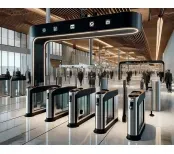
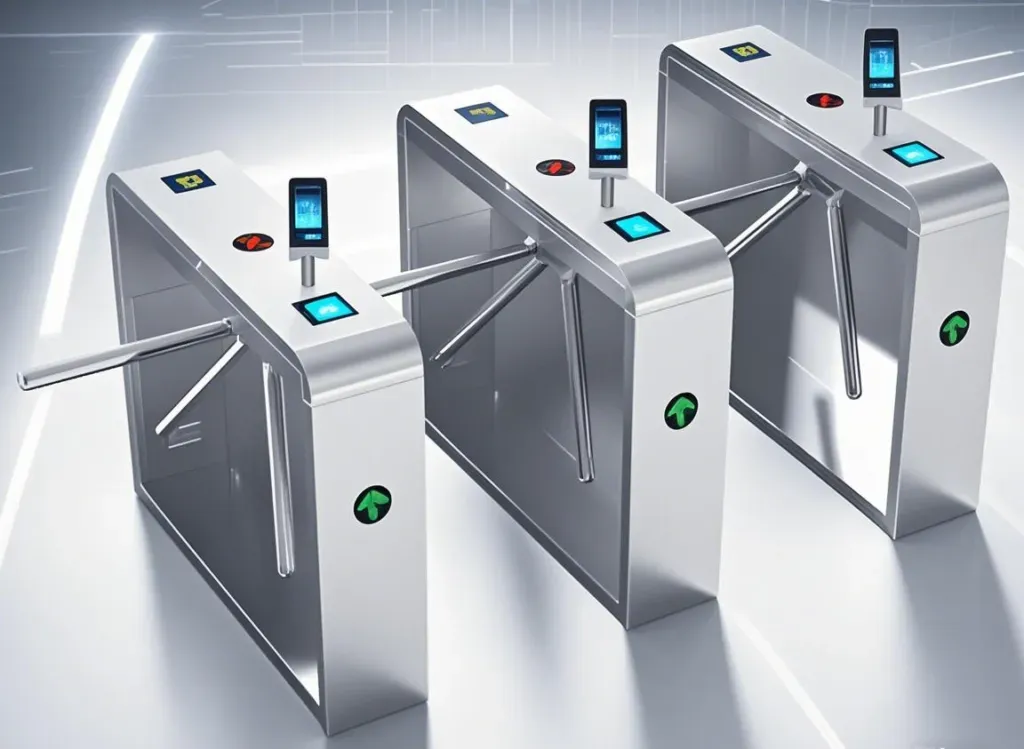
Izmir turnstile systems for access control offer more than a door lock, delivering managed entry, real-time monitoring, and auditable activity trails. In Izmir access control strategies, organizations rely on integrated solutions that blend hardware, software, and administrative processes to balance security with user convenience. This approach helps protect sensitive areas while guiding employees and visitors smoothly to the right entrances. The article explains how to evaluate options, plan deployment, and leverage real time security monitoring and reporting. From small offices to large campuses in Izmir, reliable turnstile systems support safe, efficient access and align with broader facility access control programs.
Viewed through related concepts, the topic can be described as entry management technologies, including turnstile installation Izmir, for Izmir-based facilities. These systems rely on gate barriers, credential verification, and centralized control software to govern who passes and when. Under this lens, identity proof, event logging, and analytics transform a simple barrier into a data-driven security and operations tool. LSI principles favor pairing terms like gateway controls, access credentials, and security analytics to cover the same idea from multiple angles. In practice, organizations apply these ideas to support compliance, safety drills, and smooth visitor flows across campuses, offices, hotels, and retail centers in Izmir.
1. Izmir turnstile systems for access control: a comprehensive security framework
At the heart of modern security for Izmir facilities is an integrated approach that combines physical barriers with identity verification. The phrase ‘Izmir turnstile systems for access control’ captures a family of solutions designed to restrict entry while delivering visibility into who passes through every point in time. By pairing turnstiles with readers, such as cards, mobile credentials, and biometric options, organizations create a data-driven safety system for campus, office, and hotel environments. This integrated framework balances security with a smooth user experience, aligning with the broader concept of facility access control in Izmir.
Beyond blocking unauthorized entry, this framework provides detailed monitoring and auditable records. When deployed with centralized access control software and video surveillance, managers gain real-time insights into entry patterns, peak times, and potential bottlenecks. In Izmir, where regulated workplaces and large venues require compliance, this systems fosters stricter control without compromising convenience. The result is a scalable solution that can grow with demand while preserving employee and guest flow.
2. Core components that power modern turnstile systems in Izmir facilities
Turnstiles and barriers form the physical backbone, with configurations ranging from full-height to optical turnstiles designed for space and risk profiles. Complementing them are access readers and credentials—card, mobile, or biometric—that verify identities before passage. In the context of Izmir, a layered authentication strategy often incorporates two-factor or multi-factor checks to reduce risk while maintaining efficiency for high-traffic locations.
On the software side, networked access control platforms act as the central hub for managing identities, permissions, time-based policies, and auditing. When integrated with video surveillance, the system provides real-time visibility and corroborating evidence during incidents. Redundancy features, power backup, and scheduled maintenance further ensure reliability, especially in critical sites like campuses and transit hubs where uninterrupted access is essential. This is what makes ‘turnstile systems’ a comprehensive security and monitoring solution.
3. Planning and selecting Izmir access control solutions for scalable growth
Effective implementation starts with a clear understanding of site requirements and goals. A site survey, throughput forecasts, and stakeholder alignment lay the groundwork for selecting turnstile types, readers, and software that fit now and scale later. In Izmir, evaluating local service support, spare parts availability, and compatibility with existing systems ensures a practical deployment that minimizes downtime while keeping data protected under KVKK guidelines. This planning phase ties directly into the broader field of Izmir access control and facility access control.
Technical decisions should balance current needs with future expansion. Considerations include reader technology compatibility, network architecture, and power redundancy. Integration with HR databases, time-and-attendance systems, and surveillance platforms streamlines provisioning and revocation, helping security teams maintain accurate records. For Izmir facilities, planning also means confirming vendor readiness for local maintenance, rapid repair, and continuous updates to address evolving threats.
4. Security monitoring and reporting: turning access data into actionable insights
Access events generate a wealth of data that, when analyzed, supports proactive security and operational decisions. Real-time alerting for unauthorized attempts or suspicious hold-open events keeps security teams engaged, while centralized dashboards visualize throughput, by location and user groups. In Izmir facilities, this level of visibility supports day-to-day operations and incident response, enabling faster containment and better workforce management. The combination of physical controls with security monitoring and reporting elevates the entire access program.
Regular reporting and analytics reveal patterns, anomalies, and policy violations that raw logs alone cannot explain. Scheduled reports can highlight peak access times, unusual entry sequences, or gaps in coverage, guiding staffing and maintenance decisions. With CCTV integration and robust data retention, organizations can produce auditable records for audits and regulatory requirements, fulfilling both governance and safety needs in Izmir.
5. Turnstile installation Izmir: best practices for reliability and performance
Choosing the right location, layout, and hardware is critical for reliability. Turnstile installation Izmir should consider entry flow, space constraints, and environmental factors such as heat, dust, and moisture. Hardware selection—full-height, waist-high, or optical barriers—must align with risk profiles and foot traffic, while credentials and door sensors are chosen to ensure quick passage without compromising security. Robust network and power planning prevents credential verification failures and reduces downtime during peak periods.
Deployment requires careful testing, training, and ongoing maintenance. A phased rollout allows security teams to validate throughput, data integration, and user experience before expanding to additional entrances. Local training for security staff and facilities teams, along with proactive vendor support in Izmir, helps sustain performance and reduce operational risk. Regular checks, spare parts inventory, and remote monitoring capacity are essential for long-term reliability in busy facilities.
6. Industry use cases in Izmir: optimizing facility access control with turnstile systems
Across offices, universities, hotels, retailers, and public facilities in Izmir, turnstile systems deliver controlled entry, reduced tailgating, and improved visitor management. Office campuses gain a clearer picture of who enters sensitive zones, while universities can manage student flows, staff movements, and event access with auditable records. In retail and hospitality, the combination of mobile credentials and centralized monitoring supports guest services and security without creating friction at the door.
These deployments translate into tangible outcomes: enhanced safety, better regulatory compliance, and clearer operational metrics. By leveraging effective facility access control with integrated monitoring and reporting, Izmir facilities can optimize staffing, streamline audits, and demonstrate ongoing risk management. The resulting data-driven approach supports continuous improvement, aligns with local regulations, and delivers measurable ROI for organizations of all sizes.
Frequently Asked Questions
What are the benefits of Izmir turnstile systems for access control for my facility?
Izmir turnstile systems for access control deliver enhanced security by preventing unauthorized entry while improving visitor management and incident reporting. They provide real-time monitoring and detailed audit trails, helping you analyze access patterns, plan staffing, and demonstrate KVKK-compliant data privacy. The system is scalable and designed to balance security with user convenience, supporting smooth entry flow for staff and guests.
How do Izmir access control turnstile systems integrate with security monitoring and reporting?
These systems integrate turnstiles with access control software, video surveillance, and centralized dashboards to deliver comprehensive security monitoring and reporting. Real-time alerts for unauthorized attempts and held doors keep security teams informed, while audit trails and analytics support investigations, compliance, and governance activities.
What should I consider during turnstile installation Izmir to support facility access control?
Begin with a site survey to determine throughput, space, and the right mix of turnstile types (full-height, waist-height, or optical). Ensure readers and credentials fit your security policy, and plan for reliable network and power, plus access to local support in Izmir. Also account for privacy and data retention requirements under KVKK and ensure smooth integration with existing systems.
What are the core components of a modern Izmir turnstile system for access control?
Key components include turnstiles or barriers, access readers and credentials, networked access control software, video surveillance integration, audit trails and reporting tools, and power backup. Together, these form an integrated security and monitoring platform that provides real-time visibility and auditable records for Izmir facilities.
How can Izmir turnstile systems for access control enhance compliance and data privacy in a facility?
By enforcing role-based access, minimizing stored data, and using secure data handling, these systems help meet KVKK guidelines and internal policies. They also deliver auditable event logs, retention controls, and secure reporting to support audits, governance, and regulatory compliance.
What steps are involved in planning and implementing Izmir turnstile systems for access control?
Start with a clear site survey and goals, align security, facilities, IT, and operations, and choose scalable technology. Plan for integration with HR databases, time and attendance, and CCTV, while addressing data privacy and local service support in Izmir. Implement in phases, beginning with a pilot at one entrance to validate throughput, user experience, and data flows before a broader rollout.
| Aspect | Key Points |
|---|---|
| What they are |
|
| Why they matter in Izmir |
|
| Core components |
|
| Planning and selection |
|
| Implementation approach |
|
| Security, monitoring, and reporting |
|
| Local considerations |
|
| Industry use cases |
|
| Best practices |
|
Summary
Conclusion